Skip to content
Request an Estimate
Horizontal cedar privacy fence running along a beach home

Privacy Fences

Horizontal cedar and composite privacy fences.

Posts set deep and spaced tight, so a storm does not rearrange your back yard. Level runs on sloping lots, and gates that still close in year three.

StylesTight horizontal, spaced slat, shadowbox and composite
MaterialsCedar, pressure treated, composite in an aluminum frame
Time on siteTwo to four days for most residential runs
Old fenceTear-out and haul-off quoted with the job

Styles

Three fence styles we build.

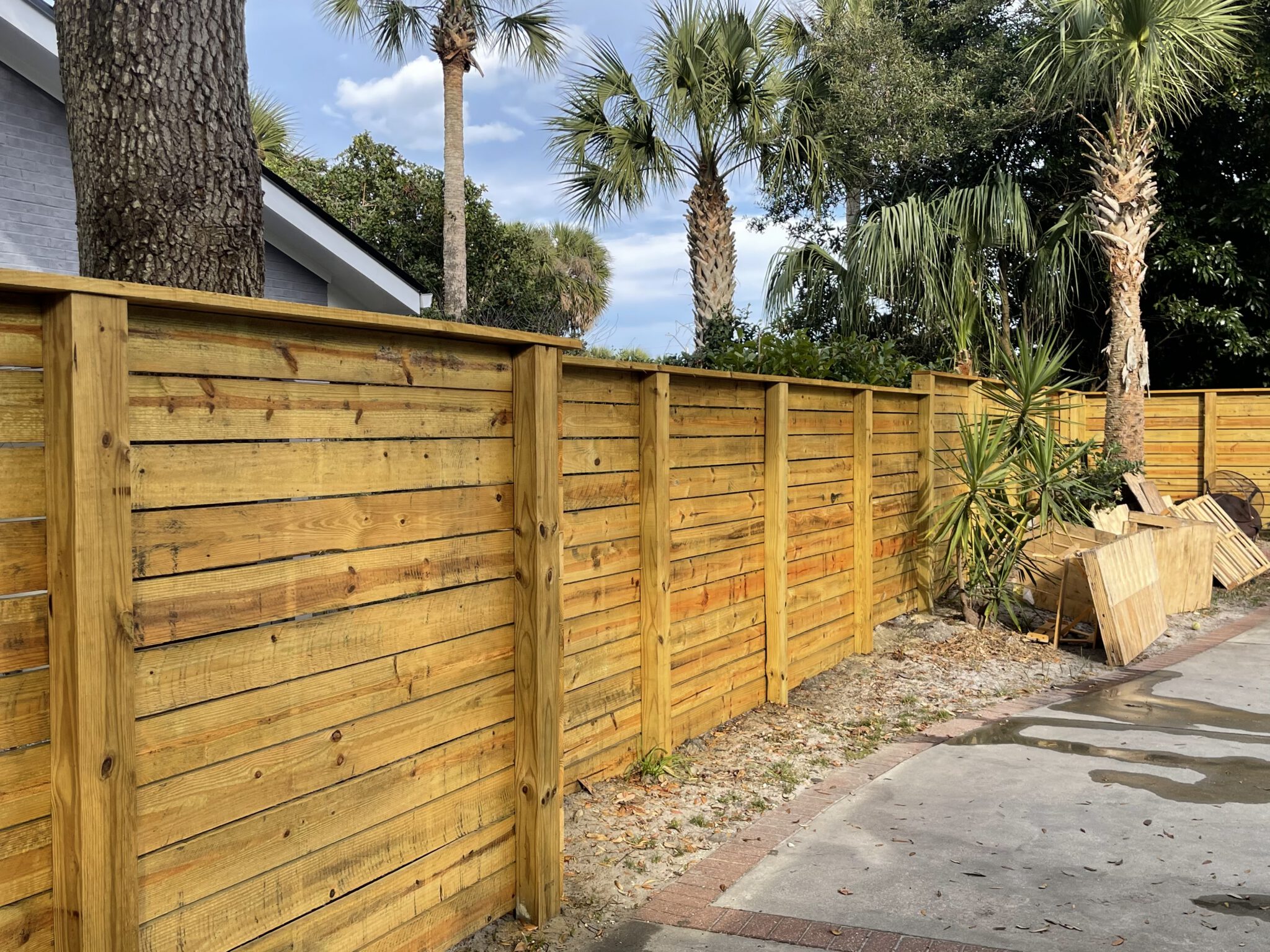
Tight horizontal cedar slat fence with concealed posts Most requested

Tight horizontal cedar

Boards run flat and close, with the posts on the inside so the street side is a clean plane. This is the look most people mean when they ask for a modern fence, and it is the least forgiving to build.
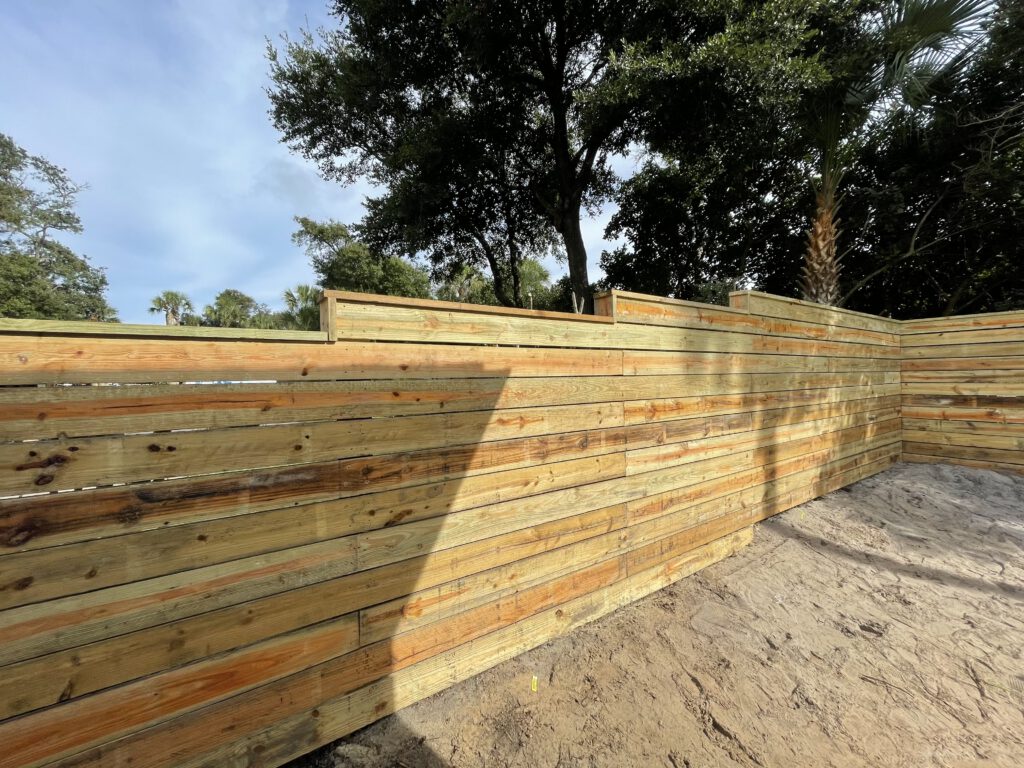
Spaced horizontal slat fence with visible gaps for airflow Airflow

Spaced slat and shadowbox

A deliberate gap between boards lets wind through instead of loading the whole panel. Worth considering on exposed lots, and it keeps a pool area from feeling like a box.
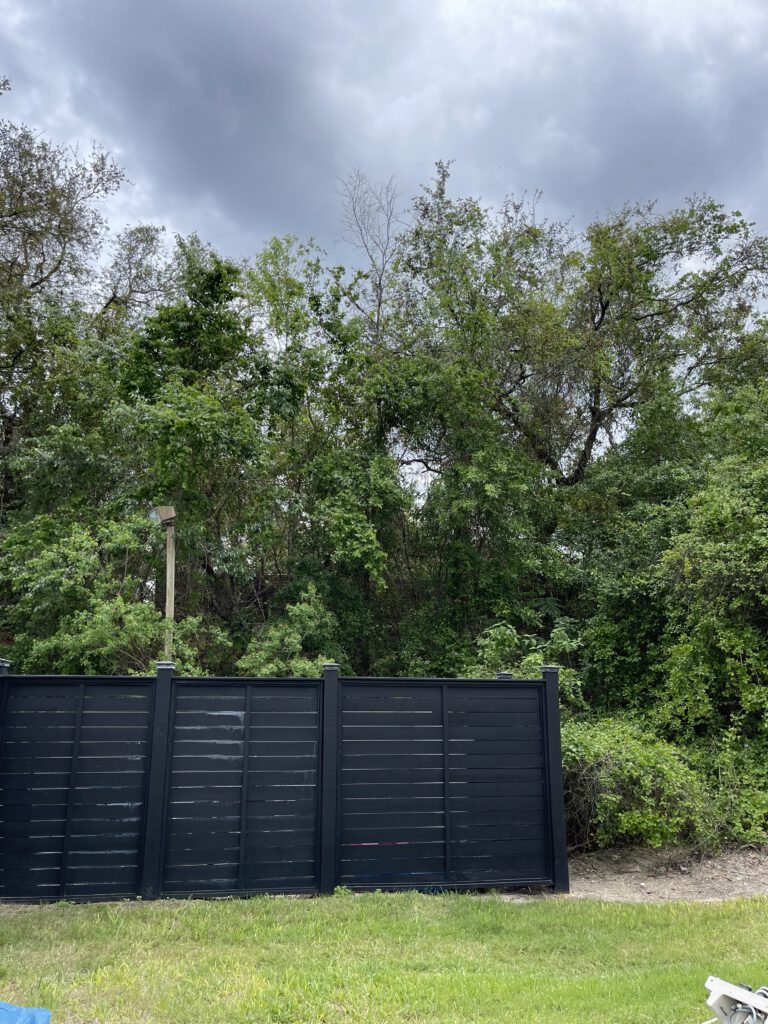
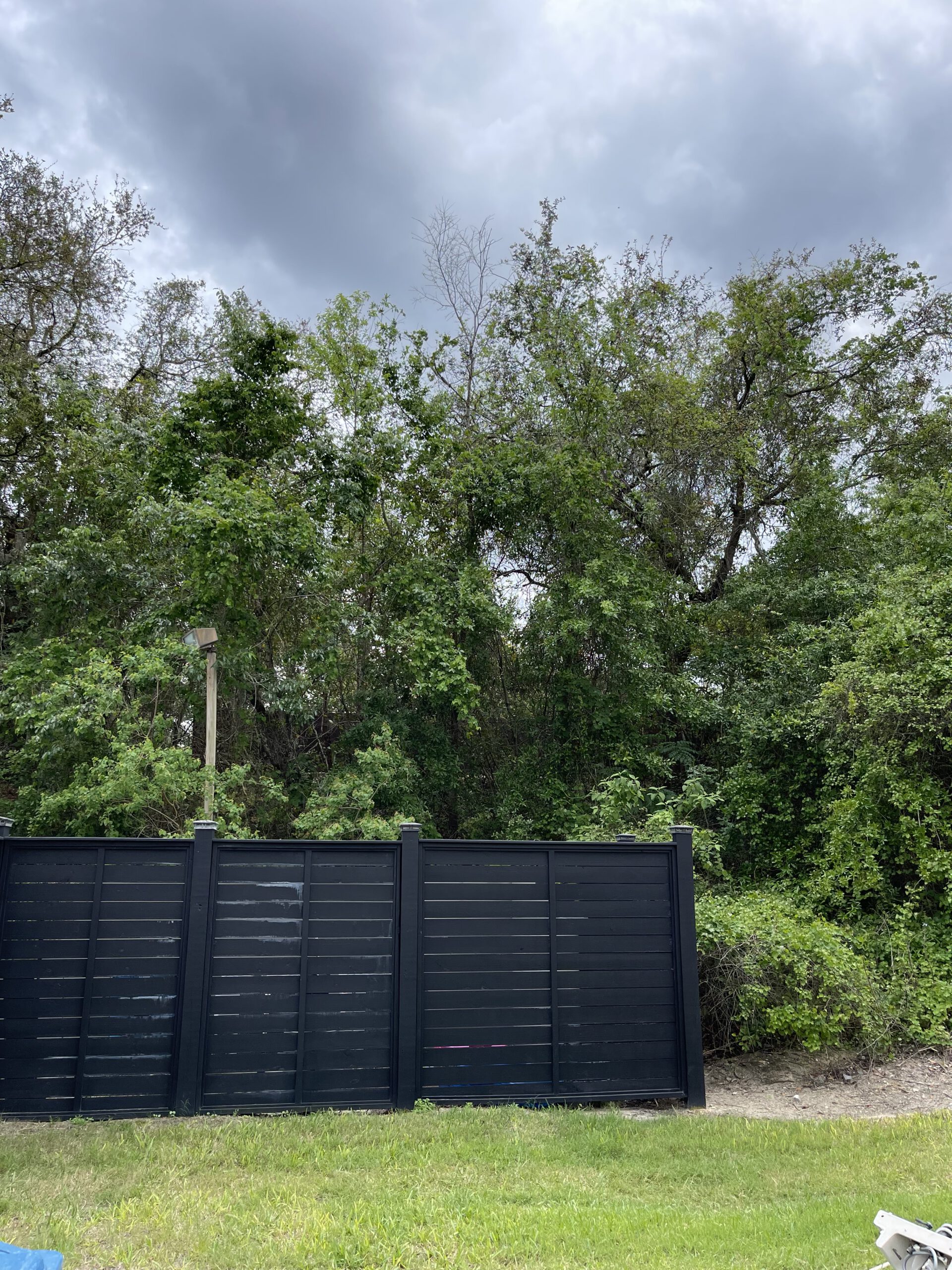
Black composite horizontal fence against tree line Low maintenance

Composite and aluminum frame

When nobody wants to re-stain anything, composite boards in an aluminum frame hold their line and their color. Higher up front, and it looks the same in year eight.

How We Set Them

A fence fails at the post, every time.

  • Posts set in concrete below the sand layer, to a depth set by the fence height rather than by whatever the last crew did.
  • Post spacing tightened on horizontal runs, because a flat panel catches far more wind than a picket one.
  • Runs stepped or racked deliberately on grade, so the top line looks intentional instead of wandering.
  • Gates built with a welded or braced frame and hinged to carry their own weight for longer than a season.
  • Hot dipped or stainless fasteners, because standard screws in cedar near salt air stain the boards within months.
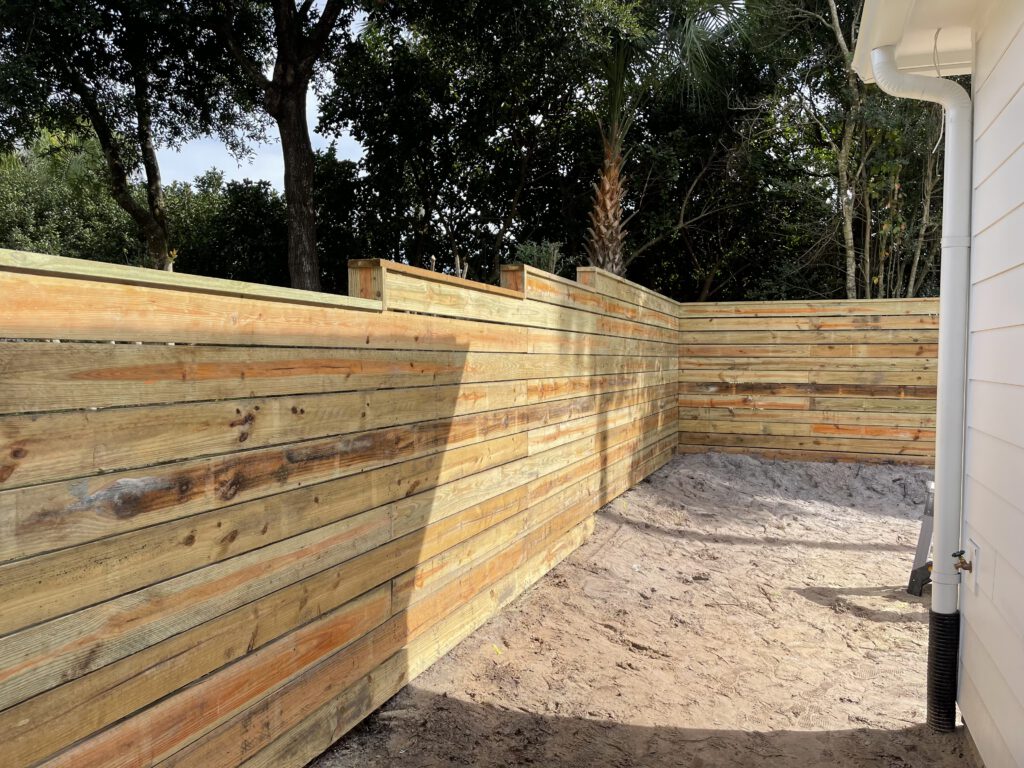
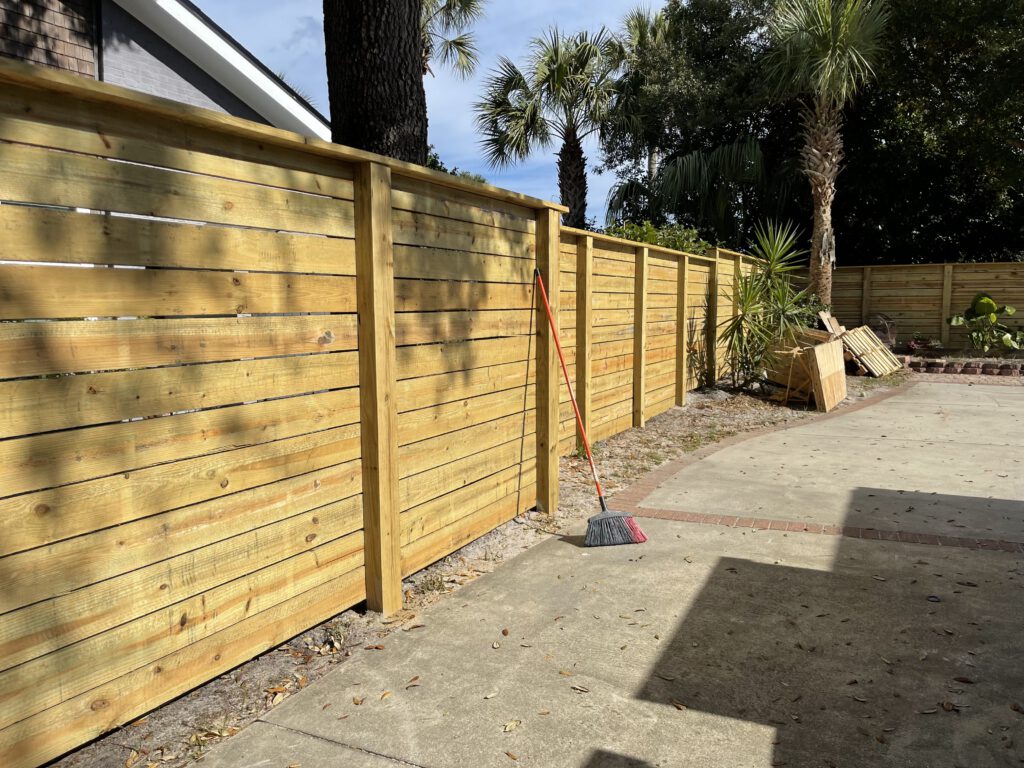
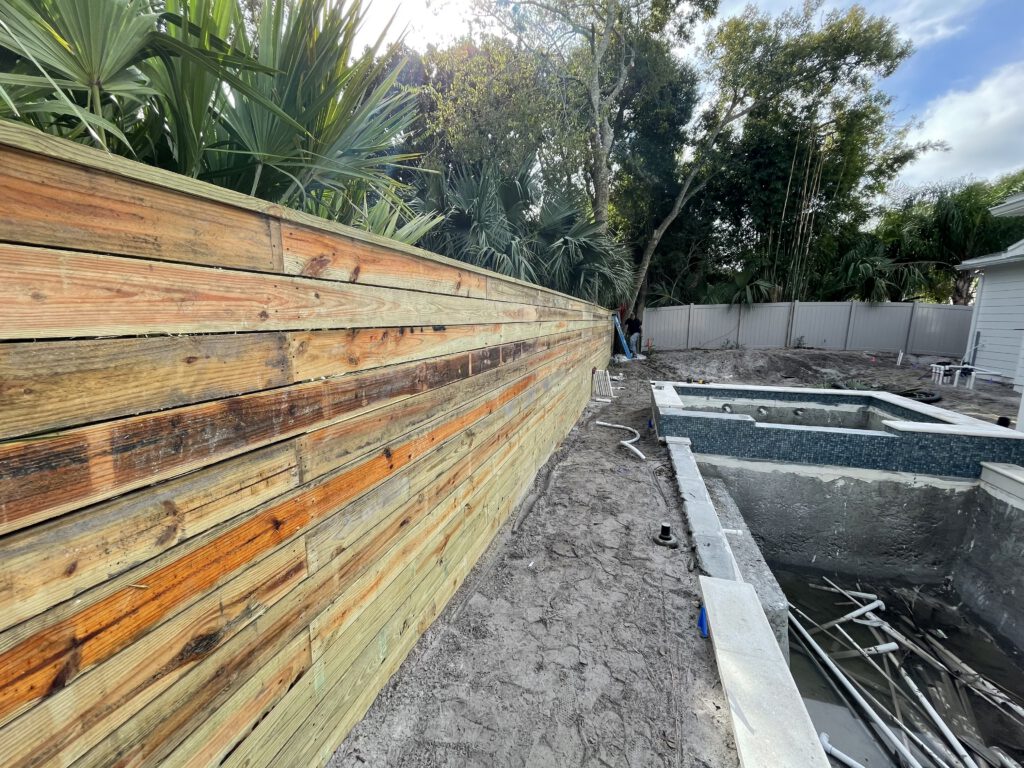
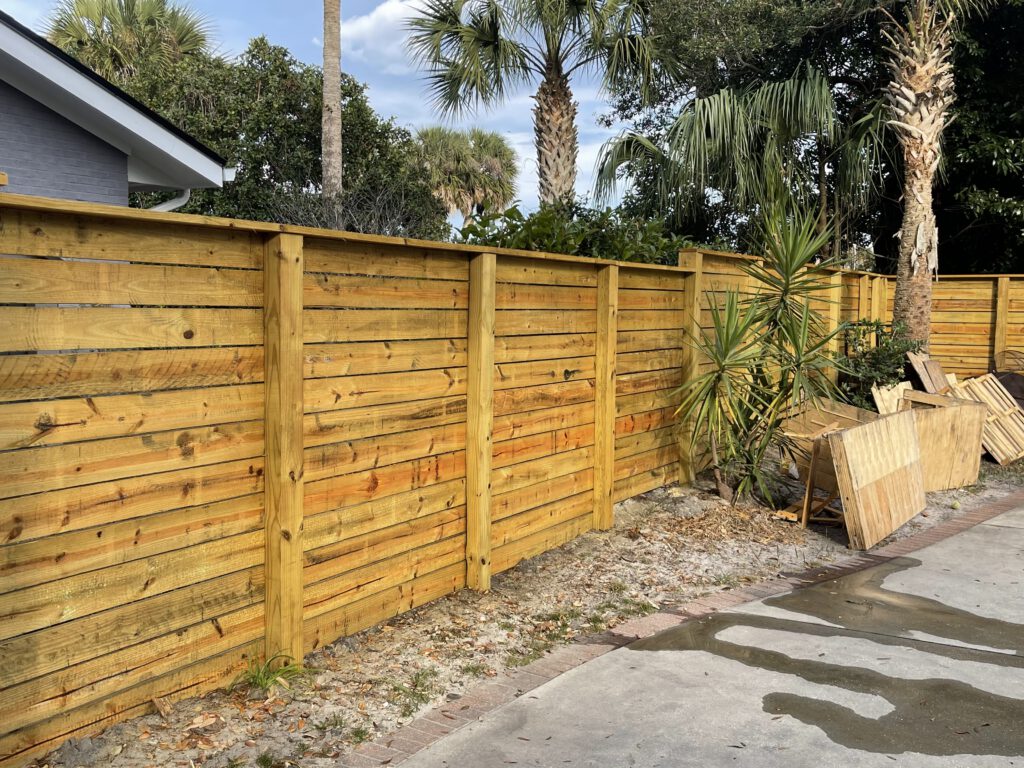
New horizontal fence panel and posts along a property line Fence installed around a pool construction area

Recent Fences

Recent fences around the beaches.
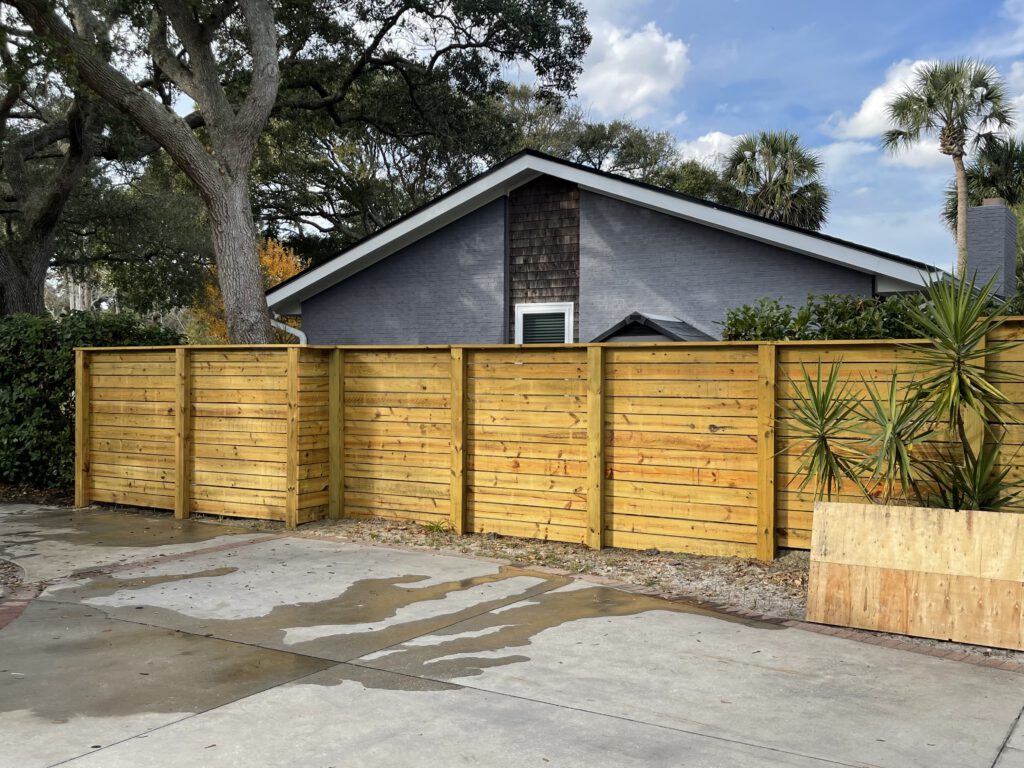
Horizontal cedar, Atlantic Beach
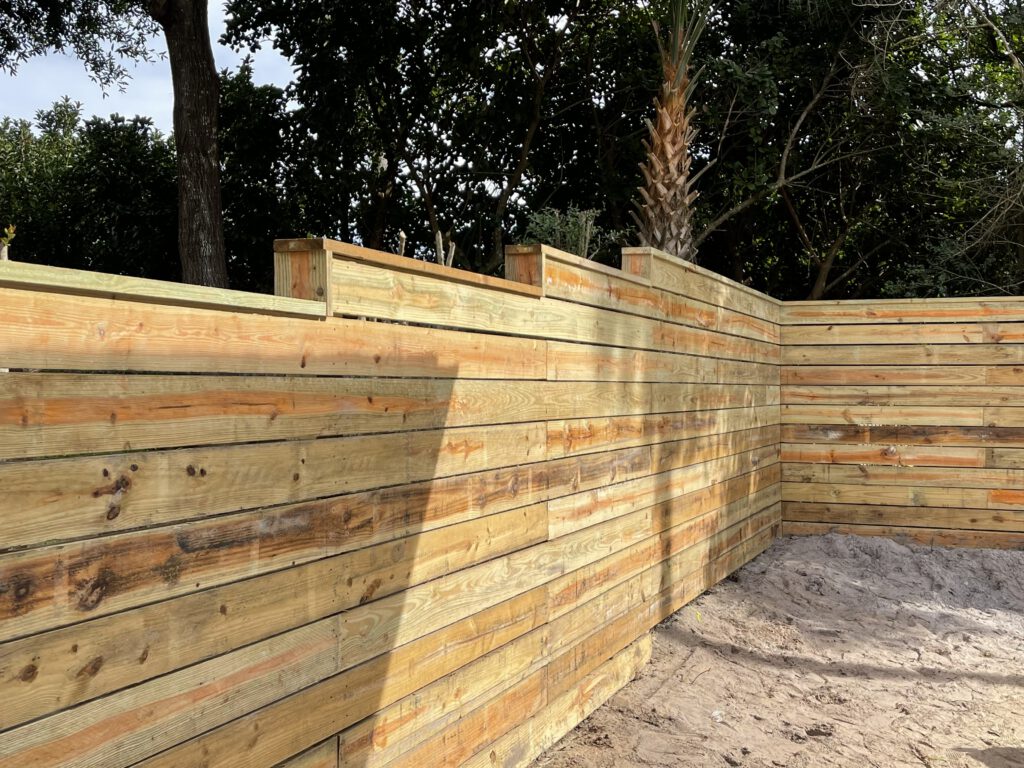
Corner run and gate post
Stepped run on a sloping lot
Slat screen beside a deck
Fence set before the pool deck
Black composite horizontal fence
Full privacy height along a drive

Budget

What a fence actually costs comes down to eight things.

Fencing prices more cleanly than anything else we build. If you know your footage and your gate count, we can usually get you close before we ever come out.

  • 01

    Linear feet

    The single biggest number. Pace the line and you are most of the way to a range.

  • 02

    Height

    Six foot is standard. Every foot above that adds board, adds post depth and adds wind load on the panel.

  • 03

    Style

    A tight horizontal fence uses roughly twice the board of a spaced one and takes longer to keep dead level. It also looks the way people want, which is why we build so much of it.

  • 04

    Material

    Pressure treated, then cedar, then composite in an aluminum frame. Cheapest to most expensive, and shortest to longest lived, in the same order.

  • 05

    Gates

    A gate costs several times a fence panel of the same width. Drive gates and double gates more again. Two gates instead of four is the easiest money you will save on this project.

  • 06

    Grade

    A flat run is fast. A sloping lot has to be stepped or racked, which is a decision about how the top line looks and it changes the labor.

  • 07

    Removing the old fence

    Pulling posts set in concrete and hauling the debris away is real work, and we quote it separately so you can see it.

  • 08

    Access and soil

    If a machine can reach the line, posts go in quickly. Sand, roots and a high water table all change how the holes behave.

Send this and we can usually quote a range the same day

  • The address
  • Roughly how many feet, even paced off
  • The height you want
  • How many gates, and whether any need to fit a vehicle
  • A photo along the line, and one of the old fence if there is one

Common Questions

Fence questions we answer every week.

How much does a fence cost?

Send the footage, the height and the gate count and we can usually give you a range over the phone. The site visit confirms it and catches the things a photo hides, like grade and access.

How tall am I allowed to build?

That is set by your municipality and often by an HOA on top of it, and it differs between Jacksonville Beach, Neptune Beach, Atlantic Beach and Ponte Vedra.

Check yours before you settle on a height. We confirm it before we build either way.

Do I need a permit?

Most of the beach towns require one for a new fence. We pull it as part of the job.

Horizontal or vertical boards?

Horizontal is what most people ask us for now. It uses more material, is far less forgiving to build, and needs tighter post spacing because a flat panel catches much more wind than a picket one.

Will it warp?

Any wood fence moves. What limits it is dry material, tight fastening, correct post spacing and a finish that keeps water out of the end grain.

Composite does not move at all, which is most of what the extra cost buys.

Which side do the posts go on?

Posts on the inside gives you the clean face and your neighbor the frame, or the other way around. It is worth a conversation with them before we build rather than after.

Get a price on your fence.

Send the rough run length, the height you want and a photo of the line. We can usually give you a range before we ever come out.

Call Get an Estimate
Site handcrafted by Imperium